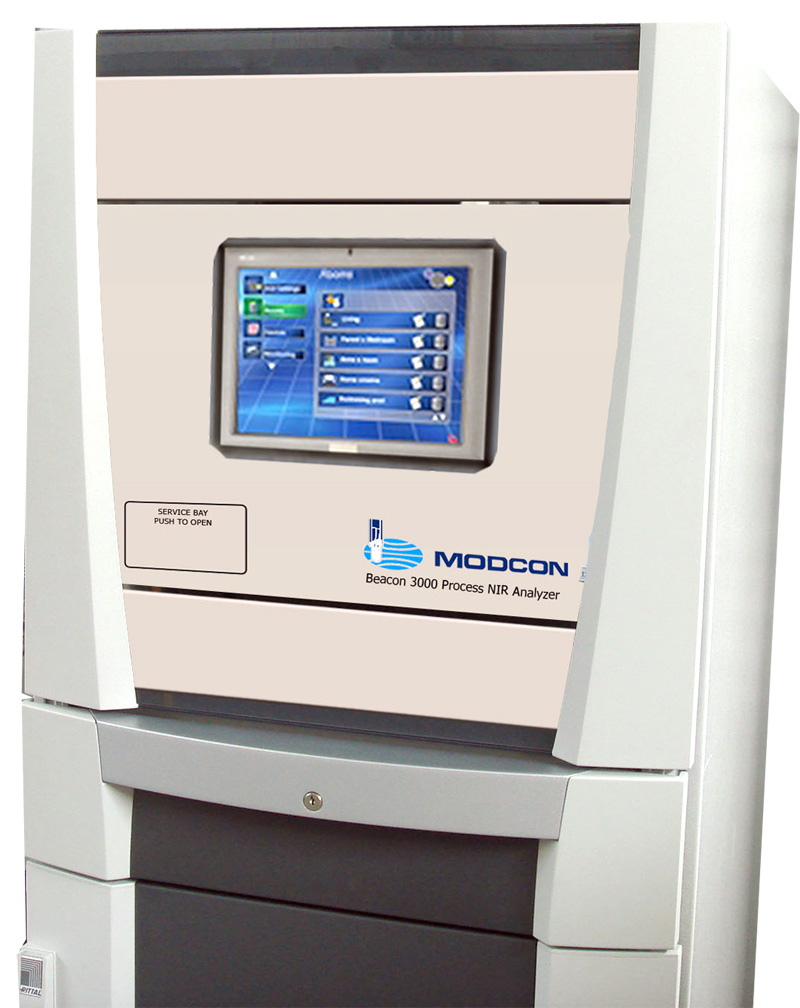


Blending of butane in gasoline is a common practice, especially during the winter season, for providing the gasoline with RVP that is required for smooth operation of car engines in cold weather. Maximum incorporation of butane will not only influence the RVP but also reduce the cost of gasoline manufacturing. Gasoline is a composition of various chemical compounds that all contribute to the physical properties. On-line process analytics is highly important to ensure that at any stage during the blending all required quality parameters, including RVP and knock properties comply with their specification, as well as to reduce giveaways to their minimum. With its exclusive properties, the Beacon 3000 NIR process analyzer is highly effective and cost saving in the butane gasoline blending process.
For plant operators, beacon in butane gasoline blending is most useful when measurement data can be acted on quickly and with confidence. In continuous industries, laboratory data remains important, but it represents a sample taken at a particular moment. Online analysers add a different capability: they show how the process is changing between laboratory samples and provide the frequency of information needed for control, optimisation and early detection of abnormal conditions.
In NIR process analysis, the analyser specification is only part of the job. Reliable results also depend on how the measurement is installed and operated. That means checking sample representativeness, pressure and temperature, phase behaviour, stream composition, response time, hazardous-area requirements, calibration method and integration with the plant DCS or control system. Even a good analyser can give misleading results when the sample arrives late, changes phase or is conditioned in a way that alters the property being measured.
Our engineering work brings together near-infrared process analysis, fuel properties, blending and real-time quality control around the actual process objective. The right arrangement may use direct in-situ measurement, an engineered sample conditioning system, optical or thermal-conductivity sensing, NIR analysis, or integration of several measurements into a wider optimisation strategy. Live analyser data can also improve the quality of information available to APC, digital twins and industrial AI by giving these systems current composition and quality data instead of relying only on inferred values.
For beacon in butane gasoline blending, the final configuration should be checked against the project datasheet and the full operating envelope. The aim is straightforward: a measurement that works under real plant conditions, can be maintained without drama and gives operators information they can use.
Modcon Systems Ltd. supports these applications with engineering, analyser integration and lifecycle services.
Beacon-3000 NIR Analyzer technology supports real-time near-infrared measurement for refinery, blending and hydrocarbon process optimization applications.